What Happened With the Murdoch Trust?
Rupert Murdoch built one of the largest media empires in history. Fox News, News Corp, Sky News, the Wall Street Journal. When he created his family trust, he structured it as an irrevocable trust dividing control among his four oldest children: Lachlan, James, Elisabeth, and Prudence.
Then he changed his mind.
Murdoch decided that Lachlan, his eldest son and the one most aligned with his editorial vision, should have sole voting control over the media properties. The other children would keep their financial interests but lose their say in how the companies were run. So Murdoch went to court in Nevada to amend the irrevocable trust.
The other three children fought back. They argued the trust was irrevocable for a reason, that the terms were set, and that their father was trying to tilt the playing field after the game had started.
The Nevada probate commissioner agreed. In a scathing decision, the court called Murdoch’s attempt a “carefully crafted charade” done in bad faith. The court found that Murdoch was not acting in the best interests of all beneficiaries. He was acting in the interest of one son at the expense of the others.
Eventually, the family reached a settlement. Lachlan ended up with operational control through a new trust structure, but only after years of litigation, massive legal fees, and a multi-billion-dollar rearrangement that played out in public. The Murdoch family’s private business became a global headline.
Why Does the Murdoch Trust Fight Matter to Alabama Families?
The scale of the Murdoch dispute is extraordinary. The mistakes behind it are not. I see the same patterns in my Alabama practice with families worth far less than the Murdochs. A family farm in Limestone County. A construction business in Madison. A rental portfolio in Birmingham. The dollar amounts are different. The human dynamics are identical.
Here are three lessons every Alabama family with a business, a farm, or real estate should take from the Murdoch case.
Why Does Irrevocable Really Mean Irrevocable in Alabama?
When you create an irrevocable trust, you are making a binding commitment. You are telling your family, the courts, and the IRS that these terms are fixed. You get certain benefits in return: asset protection, potential tax advantages, and protection from creditors. But the trade-off is that you give up the right to change the deal later because you feel differently.
The Alabama Uniform Trust Code does allow modifications to irrevocable trusts in limited circumstances. All beneficiaries can agree to changes that are consistent with the trust’s material purpose. Courts can modify trusts when circumstances change in ways the grantor could not have anticipated. But “I changed my mind about which kid I like best” is not a qualifying circumstance. Murdoch learned that the hard way.
If you create an irrevocable trust in Alabama and later try to rewrite it because your feelings changed, courts will look at your intent. If the original document says one thing and you try to force a different outcome, you are creating a lawsuit for your children. Not a plan. A lawsuit.
The fix is straightforward. Before you sign an irrevocable trust, make sure you can live with the terms permanently. If you are not ready for that commitment, a revocable trust gives you flexibility to adjust as circumstances change. Choose the right tool for where you are, not where you hope to be.
Why Should You Avoid Naming Co-Trustees With Equal Power?
Murdoch’s trust had multiple children with competing interests making decisions together. That structure guarantees conflict. One child wants to sell assets. Another wants to hold. One favors growth investments. Another wants distributions. When everyone has an equal vote and opposing goals, the result is gridlock, then litigation.
I see this in Alabama trusts regularly. Parents name all three children as co-trustees because it feels fair. Then the children disagree on whether to sell the family home, how to manage rental property, or when to distribute funds. Nobody has the authority to break the tie. The trust becomes a weapon instead of a tool.
The better approach: name one decision-maker as trustee. Give the others rights to information, accountings, and distributions, but not votes. If you want checks and balances, use a trust protector or an independent co-trustee rather than dividing authority among beneficiaries with conflicting interests.
Fairness in estate planning does not mean everyone gets the same role. It means everyone gets what they need and the plan works.
Why Is Estate Planning About Control, Not Taxes?
Alabama has no state estate tax. The federal exemption is $15 million per person, $30 million for married couples. Most families I work with are nowhere near the estate tax threshold. They are not worried about transfer taxes.
They are worried about who runs the family business after they are gone. Who gets the farm. Whether the kids will still speak to each other after the funeral. Whether the surviving spouse will be protected if they remarry. Whether a child’s creditor or ex-spouse could reach trust assets.
Those questions live in the trust language, not the tax code. The Murdoch fight was never about money. Every Murdoch child was going to be wealthy regardless of the trust terms. The fight was about control. Who would run the empire. Whose vision would prevail.
The same dynamic plays out at smaller scales every day. A father builds a plumbing company and leaves it equally to three children, only one of whom works in the business. A mother leaves a family farm to four kids, two of whom want to sell and two who want to keep it. Without clear language about management authority, buyout rights, and decision-making, these families end up in Madison County probate court.
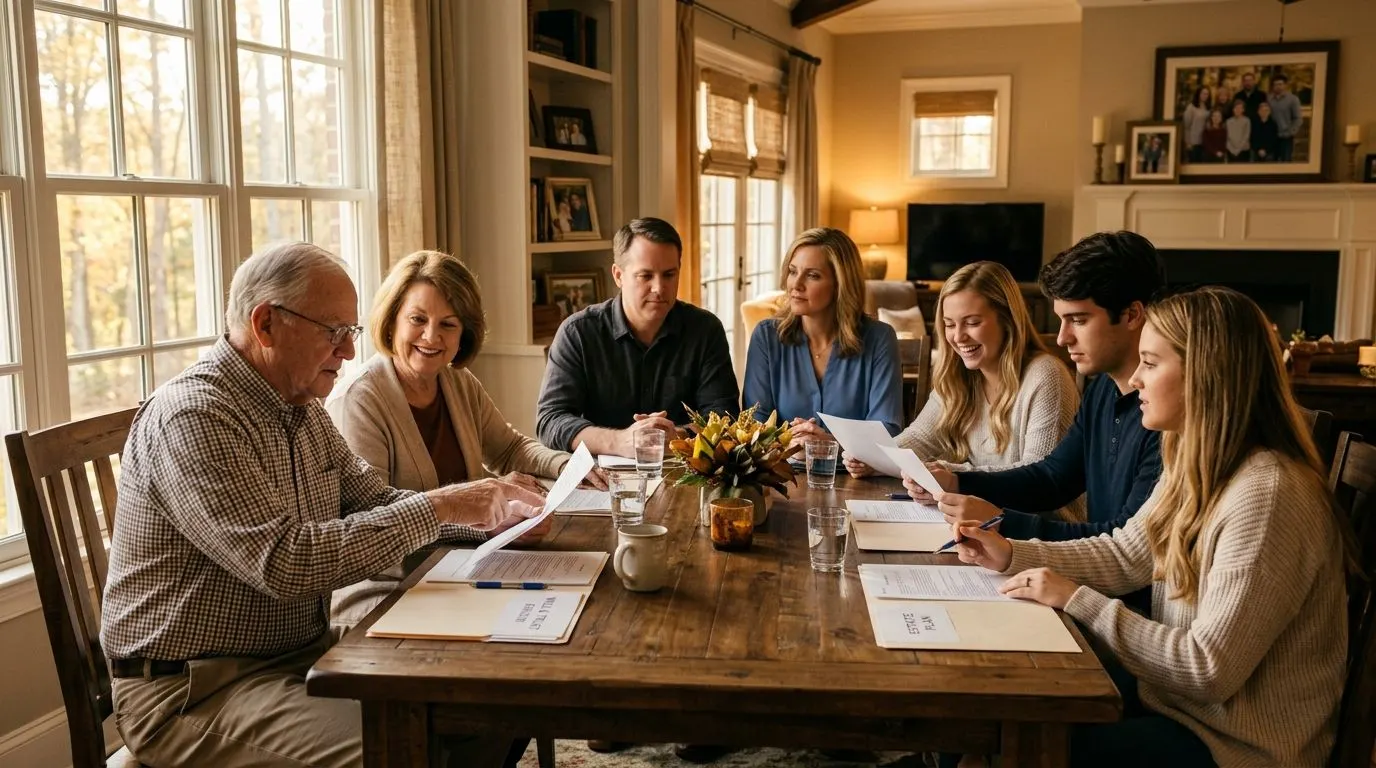
When you sit down to plan your estate, spend less time worrying about taxes and more time answering these questions: Who makes decisions? Who runs the business? What happens if the heirs disagree? Put those answers in the documents.
What Should Alabama Families Do About Their Estate Plan Now?
If your trust or will was drafted more than five years ago, or if your family dynamics have changed since you signed it, a review is worth the time. Specifically:
Review your trustee designations. If you named co-trustees with equal authority, consider whether that structure still makes sense. One decision-maker with accountability works better than three co-trustees with veto power.
Confirm your trust matches your current intent. Family relationships change. Children grow up, marry, divorce, develop substance issues, start businesses, or move out of state. If the trust you signed ten years ago no longer reflects how you want assets managed, update it now while you can.
Have the conversation with your family. Murdoch’s children were blindsided by his attempt to change the trust. Surprises create lawsuits. If you have specific plans for who gets what and why, tell your family. Not every detail. But enough that nobody is shocked when the documents are read.
Address business succession directly. If you own a business, your estate plan needs a succession plan built into it. Who runs the company? What is the buyout formula? Can non-participating heirs force a sale? These questions need answers in writing, not assumptions.
Frequently Asked Questions
What is an irrevocable trust in Alabama?
An irrevocable trust is a legal arrangement where you transfer assets out of your ownership and into a trust that generally cannot be changed or revoked once created. In Alabama, irrevocable trusts are governed by the Alabama Uniform Trust Code. Once assets are placed in the trust, the grantor gives up control. This structure provides asset protection, can reduce estate taxes for large estates, and keeps assets out of probate.. the trade-off is loss of flexibility, which is exactly what made the Murdoch dispute so costly.
Can you change an irrevocable trust in Alabama?
Under the Alabama Uniform Trust Code, an irrevocable trust can be modified or terminated in limited circumstances. All beneficiaries can agree to modify the trust if the change is consistent with a material purpose of the trust. A court can also modify a trust if circumstances have changed in ways the grantor did not anticipate.. attempting to rewrite the fundamental terms of the trust, especially to benefit one party over others, will face serious judicial scrutiny. The Murdoch case showed that courts will reject changes that look like power grabs.
Should I use a revocable or irrevocable trust in Alabama?
It depends on your goals. A revocable trust lets you maintain control and make changes during your lifetime. It avoids probate but does not provide asset protection or estate tax benefits. An irrevocable trust removes assets from your estate, provides creditor protection, and can reduce estate taxes for estates above the $15 million federal exemption. Most Alabama families start with a revocable trust for flexibility. Irrevocable trusts make sense when asset protection, Medicaid planning, or business succession is a priority.
How do I avoid trust disputes among my children in Alabama?
Three steps reduce the risk of trust disputes. First, name a single decision-maker as trustee rather than giving multiple children equal control. Co-trustees with competing interests create gridlock and litigation. Second, be specific in your trust language about who gets what, when, and under what conditions. Vague instructions invite interpretation battles. Third, review your documents every three to five years or after any major family change such as a divorce, remarriage, new grandchild, or shift in family dynamics. Outdated documents are the single biggest driver of trust disputes in Alabama.
How much does it cost to set up an irrevocable trust in Alabama?
The cost of an irrevocable trust in Alabama varies based on complexity. A straightforward irrevocable life insurance trust (ILIT) might run $1,500 to $3,000. More complex structures involving business interests, real estate, or special needs provisions can range from $3,000 to $10,000 or more. The cost of creating the trust is a fraction of the cost of litigating a dispute. The Murdoch family spent millions in legal fees fighting over trust terms that could have been drafted more clearly from the start.
Need to review your trust or estate plan? Key Law LLC helps Alabama families structure trusts, business succession plans, and estate plans that work. Free 30-minute consultation: call (256) 715-5711 or schedule online.
How much does an irrevocable trust cost in Alabama?
An irrevocable trust in Alabama costs $2,500 to $10,000 depending on complexity. A straightforward irrevocable life insurance trust (ILIT) runs $1,500 to $3,000. Complex trusts with business interests, multiple beneficiaries, or tax planning provisions cost $5,000 to $10,000 or more. These costs are small compared to the litigation expenses of a poorly drafted trust.