Fiduciary Duties in Alabama: What Executors and Trustees Must Know
Your uncle named you executor of his estate. You thought this meant gathering his things and giving them to family. Now you are staring at bank statements, investment accounts, and a house full of forty years of accumulation. You learned you are personally liable if something goes wrong.
Being named executor or trustee by someone who trusts you is an honor. It is also a legal minefield. The law does not care that you are doing this for free, for family, or with good intentions. The standards are absolute. And the consequences for getting it wrong follow you for years.
This is what fiduciary duty means in Alabama, and why you need to take it seriously.
What Liability Risks Does Nobody Warn You About?
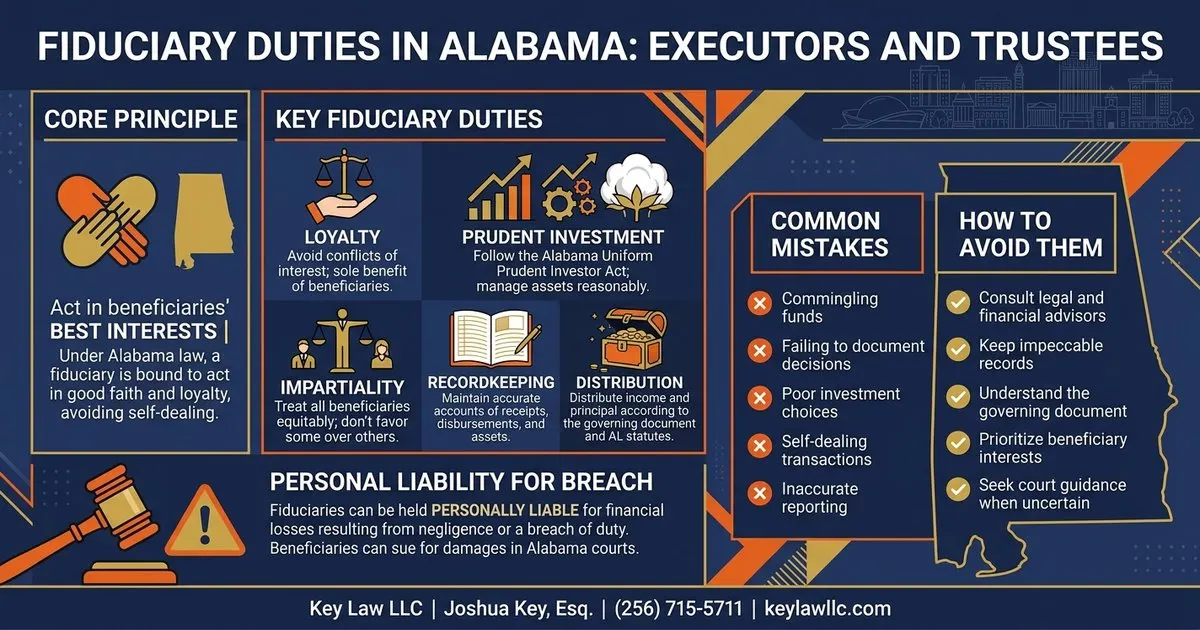
Fiduciaries in Alabama are held personally liable for losses. Not liable as in the estate pays. Personal means you pay. From your savings, your house, your future earnings.
I represented a trustee who distributed trust assets too early, before all taxes were paid. The IRS came back for $80,000 in unpaid estate taxes. The trustee had already given the money to beneficiaries. She became personally responsible for the shortfall.
Another executor sold estate property to himself at what he believed was fair market value. His siblings disagreed. The court removed him as executor, denied his commissions, ordered him to repay the difference between his price and the actual fair market value, and made him pay his siblings’ legal fees. He lost money being executor.
These were not crooks. They were family members trying to help. They misunderstood the rules. The law punished them anyway.
What Does Fiduciary Duty Require?
Fiduciary duty is the highest legal standard of care. It consists of specific obligations you must satisfy.
Duty of Loyalty: You must act solely for the benefit of beneficiaries. No self-dealing. No conflicts of interest. No borrowing from the estate. No accepting gifts from parties doing business with the estate. Even the appearance of impropriety gets you removed.
Duty of Prudence: You must manage assets carefully. This means preserving capital first, generating reasonable returns second. Risky investments are prohibited. Dormant accounts must be activated. Property must be insured and maintained. You are a steward, not a speculator.
Duty of Impartiality: If multiple beneficiaries exist, you must not favor one over another unless the will or trust specifically authorizes it. You must not distribute early to the beneficiary who needs cash while waiting for the other. Everyone is treated equally.
Duty to Account: You must keep detailed records of every transaction and provide regular reports to beneficiaries. Executors file inventories with the probate court. Trustees provide accountings directly to beneficiaries under the Alabama Uniform Trust Code.
Duty of Confidentiality: Estate and trust information is private. You must not discuss beneficiary interests with outsiders without authorization.
How Alabama Law Specifically Applies
Alabama executors operate under the Alabama Probate Code, specifically Title 43, Chapter 2. Trustees operate under the Alabama Uniform Trust Code, Title 19, Chapter 3B. Both impose fiduciary standards, but enforcement differs.
Under Ala. Code § 43-2-42, executors must file an inventory within two months of appointment or face removal. The inventory must list all assets at date of death values. Undervaluing or omitting assets is a breach.
Under the Alabama Uniform Trust Code § 19-3B-813, trustees must keep beneficiaries reasonably informed. This includes notifying qualified beneficiaries of trust existence and their rights. Trustees must provide accountings at least annually covering assets, liabilities, receipts, and disbursements.
Alabama courts take fiduciary breaches seriously. Removal is common. Personal liability is ordered when losses result from negligence, not only intentional wrongdoing. Good intentions are not a defense.
Executors report to the probate court throughout administration. Trustees generally operate independently unless a beneficiary petitions for review. This creates different dynamics: executors have court oversight, trustees have beneficiary surveillance.
What Breach Catches Everyone?
The most common fiduciary breach I see is inappropriate asset distribution timing. Executors and trustees feel pressure from needy beneficiaries to distribute early. They comply. Then a creditor claim arrives, or the IRS demands additional taxes, or a deed is discovered the estate owes.
I had an executor who distributed everything to the three children within six months. Then the estate received a $25,000 medical bill insurance did not cover. The executor had to pay it personally because the beneficiaries had already spent their shares.
Alabama law requires executors to publish notice to creditors and wait for the claims period to expire. This is typically six months. Distributing before this deadline exposes you to personal liability. Even if creditors do not appear, wait. The standard is not whether claims exist. The standard is whether you followed procedure.
Trustees have more flexibility but face the same risk. Once distributed, recovering assets from beneficiaries is nearly impossible. Courts hold the trustee liable even when the oversight was innocent.
What to Do Next
If you are named executor or trustee, hire an estate attorney before accepting appointment. Understand your obligations before you bind yourself. Sometimes declining the role is the smartest choice.
If you are currently serving, request a fiduciary duties checklist. Document every decision. Never commingle personal and estate funds. Never distribute assets early. Communicate frequently with beneficiaries even when you have nothing new to report.
Schedule a free 30-minute consultation for fiduciary guidance. I will review your specific situation and help you meet Alabama’s requirements safely.
Frequently Asked Questions
What is a fiduciary duty in Alabama?
A fiduciary duty in Alabama is the highest legal standard of care. It requires executors and trustees to act solely in the beneficiaries’ best interests, with loyalty, prudence, and full disclosure. Fiduciaries must avoid conflicts of interest, manage assets carefully, keep detailed records, and never use the position for personal gain.
What happens if an executor breaches fiduciary duty in Alabama?
An Alabama executor who breaches fiduciary duty faces personal liability for losses caused, removal from the position, denial of executor commissions, and potential criminal charges for theft or fraud. Beneficiaries sue for damages, and courts order the executor to repay misappropriated funds with interest.
How does a trustee differ from an executor in Alabama?
An executor administers a probate estate and closes it once assets are distributed. A trustee manages trust assets according to the trust document’s terms, which often spans years or generations. Executors report to probate courts; trustees generally do not unless ordered. The fiduciary duty standard applies equally to both roles.
Are executors or trustees held personally liable in Alabama?
Yes. Alabama executors and trustees face personal liability for losses caused by breach of fiduciary duty. This includes investment losses from imprudent decisions, losses from self-dealing transactions, and failure to pay estate or trust taxes. Personal liability means the fiduciary must repay losses from their own assets.
What is the duty of loyalty for Alabama fiduciaries?
The duty of loyalty requires Alabama fiduciaries to act solely for the benefit of beneficiaries, not themselves. This prohibits self-dealing, accepting kickbacks, mixing personal funds with estate or trust funds, and favoring one beneficiary over others without authorization. The fiduciary must avoid even the appearance of conflicts of interest.
Does an Alabama executor have to account to beneficiaries?
Yes. Alabama executors must file an inventory with the probate court within two months of appointment and provide accountings annually or upon request. Trustees must keep beneficiaries reasonably informed and provide accountings at least annually under the Alabama Uniform Trust Code, or more frequently if the trust requires.